

Nigeria’s Moment at the UN and the Jimoh Ibrahim Factor
~ Ogungbemi Adeyemi Orimisan
In diplomacy, timing is often as critical as strategy. For Nigeria, this is one of such moments. Seeing the world grapples with shifting alliances, economic uncertainty and complex security challenges, the need for a clear, confident and credible voice at the global stage has never been more urgent. That moment found expression in Abuja with the formal presentation of letters of credence to ambassadors cleared by their host countries and international organisations.
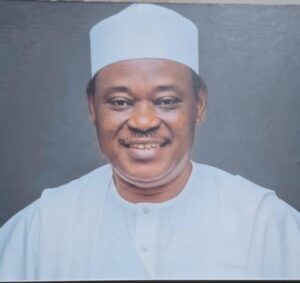
At the centre of this unfolding narrative is His Excellency, Dis Senator (Amb.) Jimoh Ibrahim, Ph.D, CFR, whose emergence as Nigeria’s Permanent Representative to the United Nations signals more than a routine diplomatic appointment. It reflects a deliberate positioning of capacity, intellect and political experience at a time when Nigeria must assert itself with clarity and purpose.
The significance of the occasion extends beyond ceremony. It speaks to a broader recalibration of Nigeria’s foreign policy posture; one that recognises the importance of strong representation in multilateral spaces where global decisions are shaped. Definitely, with Jimoh Ibrahim at the fulcrum of global diplomatic engagement, Nigeria is ready to engage the world with renewed intent.
Yet, within this collective diplomatic front lies what may be described as the “Jimoh Ibrahim factor.” It is the idea that individuals matter in diplomacy; that beyond policy frameworks and institutional mandates, the effectiveness of engagement often rests on the competence, depth and strategic thinking of those entrusted with national representation.
In Ibrahim, Nigeria presents a figure shaped by brillant, exceptional excellent academic rigour and public service, one who understands both the language of governance and the subtleties of global negotiation. At the United Nations, where influence is built through persuasion, alliances and intellectual clarity, such attributes are not merely desirable; they are essential.
Nigeria’s moment at the UN, therefore, is not just about presence, but about performance. It is about how effectively the country can articulate its interests, build partnerships and contribute meaningfully to global discourse. The stakes are high, but so too is the opportunity.
If this moment is to be fully realised, it will depend not only on policy direction from Abuja but on the capacity of its representatives to translate vision into influence. In that equation, the Jimoh Ibrahim factor may well prove decisive.