

No Room for Diminishing Returns: Ondo South Must Choose Excellence Over Mediocrity
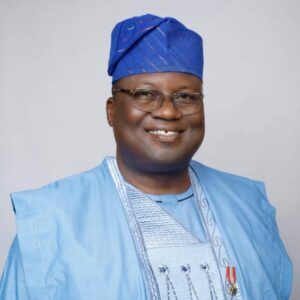
When a people send their brightest voices to speak for them, their future speaks louder in the councils of power.
This statement captures a fundamental truth about representative democracy: leadership is not merely about occupancy of office, but about the quality of intellect, experience, and vision brought into governance. As Ondo South approaches another electoral cycle, the central question should not be who is available to represent the district, but who is best equipped to advance its interests at the highest levels of national decision-making.
Within this context, the candidacy of Professor Dayo Faduyile stands out as a strong argument for competence-driven representation. His academic and professional background reflects a level of intellectual depth that is both rare and necessary in contemporary legislative practice. As a Professor in the Department of Pathology and Forensic Medicine, with specialization in Cytopathology, Gynaecological Pathology, and Forensic/Autopsy Pathology, he embodies a culture of precision, critical thinking, and evidence-based analysis, qualities essential for effective lawmaking and policy development.
His distinction as the pioneer Professor of Forensic Medicine in Ikale land underscores a career defined by trailblazing achievements and intellectual leadership. It speaks to a capacity not only to function within established systems but to expand their boundaries, a trait that is invaluable in a legislative environment that demands innovation and reform.
Beyond academia, Professor Faduyile’s record of leadership reinforces his suitability for higher public office. His tenure as former President of the Nigerian Medical Association placed him at the forefront of national healthcare advocacy, where he engaged government institutions and navigated complex policy challenges. This experience reflects proven ability in negotiation, consensus-building, and national-level engagement.
His current responsibilities as Chairman of the Governing Council of the Federal College of Education, Kontagora, and as Chairman of the Committee of Chairmen of Governing Councils of Federal Colleges of Education further highlight his administrative competence. These roles demonstrate a strong grasp of institutional governance, strategic oversight, and policy direction, all of which are directly relevant to legislative responsibilities.
Equally important is his multidimensional engagement with society. As a lecturer, writer, activist, and philanthropist, he represents a blend of intellectual engagement and social consciousness. This combination reflects both elite competence and grassroots awareness, a balance that is critical for responsive and inclusive representation.
At this juncture, it is necessary to acknowledge that the standard of representation in Ondo South has been significantly elevated by Jimoh Ibrahim. His tenure has contributed to increased visibility and intellectual engagement within the Senate, thereby setting a benchmark for performance.
This reality introduces a crucial consideration: Ondo South cannot afford a diminishing return in representation. The stakes extend beyond political symbolism to include influence, access, and development outcomes. Representation is not about sending just anyone; it is about sending the most capable.
The Nigerian Senate remains a critical arena where national priorities are debated and resources are allocated. In such a space, the difference between effective and ineffective representation can directly shape the trajectory of a constituency’s development. This makes the case for quality not just persuasive, but necessary.
Professor Dayo Faduyile’s profile aligns with this expectation. His academic excellence, leadership experience, administrative exposure, and societal engagement collectively position him as a candidate capable of sustaining and advancing high-quality representation. His candidacy reflects a broader argument for merit, competence, and capacity in leadership selection.
Ultimately, the choice before the electorate is both simple and profound. It is a choice between continuity of quality and the risk of decline. If the future of a people is shaped by the voices they send to represent them, then that choice must be guided by excellence, not expediency.
In the final analysis, representation is not merely about presence, it is about performance, influence, and impact. And in the councils of power, quality remains the defining factor between participation and true effectiveness.
Babatunde KUYE ✍️
