

Ondo South Bye-Election Result Raises Fresh Questions Over Tinubu’s 2027 Re-election Bid
By Olusegun Aiyerin
The Ondo South Senatorial bye-election held on Saturday, June 20, 2026, may have ended with the declaration of a winner, but the political conversations and lessons arising from the exercise are only beginning. Beyond the immediate outcome lies a more consequential question: what does the result suggest about the political outlook for President Bola Ahmed Tinubu’s re-election bid in 2027, particularly in Ondo State?
According to the official results announced by INEC, a total of 70,770 votes were cast in the election. Of these, 70,168 were valid votes while 602 were rejected as invalid. Professor Francis Dayo Faduyile, OON, of the APC emerged victorious with 68,474 votes. Adeolu Akinwumi of the APM came a distant second with 1,411 votes, while APP’s Olaoluwa Adesanya secured 213 votes and Funso Clement of BP polled 70 votes.
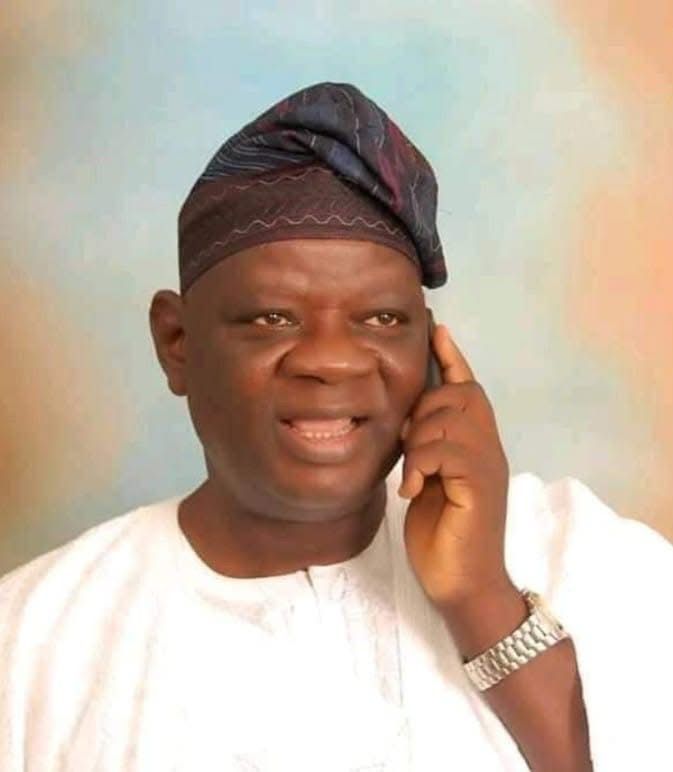
Without doubt, congratulations once again to Senator-elect, Professor Dayo Faduyile. His victory represents both a personal and political milestone. For his Ikoya–Igbisin–Oloto political axis, which historically has never had any elective representation beyond local government elective offices of mandatory elected Councillor, this emergence carries symbolic significance – and also breaks that jinx. Having pursued several elective ambitions over the years, his eventual success reflects persistence and governor Ayedatiwa’s political support that made it possible.
Yet, beyond celebration, the bye-election raises broader strategic questions.
Prior to the election, Governor Lucky Orimisan Aiyedatiwa had publicly expressed confidence that Ondo State would deliver over one million votes for President Tinubu in the 2027 general election. The governor anchored that optimism on ongoing federal projects and the broader implementation of the Renewed Hope Agenda, arguing that difficult but necessary reforms are laying foundations for long-term national growth and economic stability.
That political target remains achievable in theory, but the Ondo South bye-election introduces important realities into the discussion.
The most striking figure from the election was not APC’s margin of victory but voter participation. Out of 672,302 registered voters, only 70,811 were accredited to vote, representing approximately 10.5 percent turnout. In practical terms, nearly nine out of every ten registered voters did not participate.
This is where the conversation shifts from electoral victory to electoral engagement.
INEC Resident Electoral Commissioner, Mutiu Agboke, reportedly described the exercise as a “testing ground for 2027.” If that characterisation is accepted, then the major lesson may not be who won but who stayed away.
For comparison, the 2023 general election in Ondo South recorded 176,449 votes between APC and PDP alone. That figure is significantly higher than the total votes recorded in this bye-election. The contrast suggests not necessarily a decline in APC’s electoral strength but a deeper challenge of voter mobilisation.
Voter apathy occurs when eligible citizens choose not to participate in elections despite having the opportunity to do so. It often reflects low political interest, reduced enthusiasm, dissatisfaction, or weak confidence in the electoral process. The Ondo South figures point strongly in that direction.
For a party seeking to deliver one million votes statewide in 2027, turnout becomes a central issue.
A considerable portion of that target would naturally be expected to come from Ondo South and particularly from areas politically associated with the governor and other influential actors. Yet the numbers from previous elections provide useful context.
In the 2023 Ondo South senatorial election, APC’s Jimoh Ibrahim secured 110,665 votes. In the 2023 presidential election, President Tinubu recorded 106,052 votes across the six local governments of the district. Compared with those performances, APC’s 68,474 votes in the 2026 bye-election appear modest despite facing a less competitive opposition field.
A breakdown of the bye-election results by local government further enriches the conversation. APC recorded 9,036 votes in Irele, 16,330 in Okitipupa, 10,361 in Ese-Odo, 13,444 in Odigbo, 7,472 in Ile-Oluji/Oke-Igbo and 11,831 in Ilaje.
One observation is that numbers speak for themselves. For example, Irele gave 9,036 votes, Okitipupa gave 16,330 votes. Zoning already reserves the Irele/Okitipupa Federal Constituency seat for Okitipupa. The turnout gap reinforces it. With almost twice the votes, Okitipupa has both the arrangement and the electoral muscle to justify the MHR slot.
In addition, two observations emerge. First, Okitipupa once again demonstrated considerable electoral value within the district. Second, expectations would ordinarily be higher in strategic political locations such as Ilaje and Okitipupa, given their symbolic importance and existing political structures.
Another important factor is that the bye-election did not feature the full competitive intensity usually associated with general elections, especially with the absence or reduced influence of some established opposition blocs such as PDP, ADC and NDC. Under such conditions, stronger turnout might ordinarily have been expected.
This does not mean President Tinubu’s re-election prospects are in danger. Nor does it suggest that APC’s support base has collapsed.
What the Ondo South bye-election does suggest is that electoral assumptions may require fresh evaluation. Political momentum cannot be measured solely by victory margins; it must also be measured by participation levels, voter enthusiasm, alliance strength and mobilisation capacity.
The questions that now arise are straightforward but important.
Has voter behaviour changed? Are existing mobilisation strategies still effective? Can historical voting patterns still be relied upon? Should campaign messaging and grassroots engagement be recalibrated ahead of 2027?
These questions do not undermine confidence in future electoral success. Rather, they recognise that political realities evolve and that winning elections requires constant reassessment.
Ultimately, the Ondo South bye-election may not predict the outcome of the 2027 presidential election, but it offers an early signal that cannot be ignored.
If voter turnout remains weak in lower-stakes elections, political actors must begin asking a more difficult question: if people are not sufficiently motivated to come out for a Senate bye-election today, what guarantees stronger participation in a presidential election tomorrow?
The answer to that question may determine whether the ambition of delivering one million votes for President Tinubu in 2027 becomes political reality or remains a campaign aspiration.