

FROM A FAKE LIFE TO A REAL ECONOMY: How President Bola Ahmed Tinubu Is Repositioning Nigeria for Sustainable Prosperity.
By Babatunde KUYE
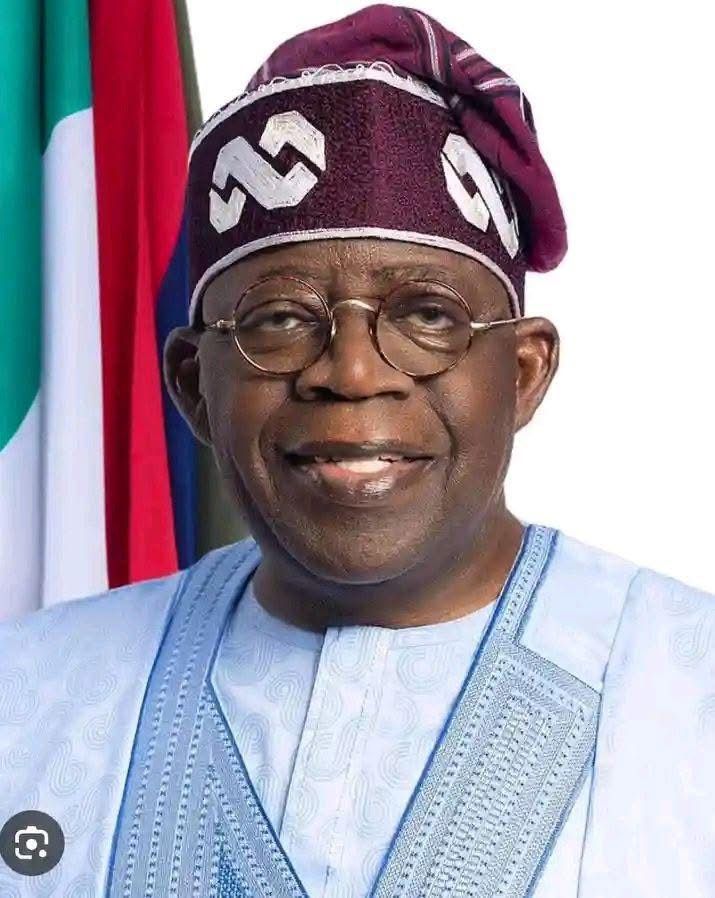
“The true measure of leadership is not the ability to make popular decisions, but the courage to make necessary ones.”
For decades, Nigeria lived an economic illusion. We projected prosperity while surviving on borrowed resources. We consumed more than we produced, subsidized inefficiency, rewarded waste, maintained an artificial exchange-rate regime, and repeatedly postponed difficult economic decisions because they were politically inconvenient.
Simply put, Nigeria was living a fake life.
Like every illusion, however, reality eventually catches up. The economic model that sustained the country for years had become increasingly unsustainable. Public debt continued to rise, debt servicing consumed a substantial portion of government revenue, investor confidence weakened, foreign exchange became scarce, and fuel subsidy drained trillions of naira from public finances. It was evident that the nation could no longer continue on the same path.
When President Bola Ahmed Tinubu assumed office in May 2023, he inherited an economy confronted by enormous structural challenges. Rather than postpone difficult decisions as had become the norm, he chose to confront them head-on. It was a politically risky path, but one he considered necessary to rescue Nigeria from an economy built on unsustainable spending and recurring fiscal crises.
Among the administration’s most significant reforms was the removal of fuel subsidy—a decision successive governments acknowledged was inevitable but consistently avoided because of its political consequences.
For years, the subsidy regime consumed trillions of naira annually. Instead of benefiting ordinary Nigerians as intended, it became associated with corruption, smuggling, rent-seeking, and widespread inefficiency. Resources that could have transformed critical sectors such as education, healthcare, agriculture, infrastructure, power, and security were instead committed to sustaining an increasingly expensive subsidy system.
Nigeria was effectively borrowing money to finance consumption.
President Tinubu brought that era to an end.
The immediate consequences were understandably painful. Transportation costs increased, inflation accelerated, and millions of Nigerians experienced severe economic hardship. Those challenges are genuine and should never be dismissed. Yet history has consistently shown that major economic reforms often impose short-term costs before delivering long-term benefits.
Another bold decision was the unification and liberalization of Nigeria’s foreign exchange market.
For years, the country operated multiple exchange-rate windows that distorted the economy, encouraged arbitrage, discouraged foreign investment, and undermined confidence in the naira. Rather than reflect economic realities, the exchange rate was sustained largely through administrative controls.
The inevitable consequence was a currency that appeared stronger on paper than it truly was.
By allowing greater market determination of the exchange rate, the Tinubu administration sought to restore transparency, rebuild investor confidence, attract foreign capital, and create a more competitive economy capable of generating foreign exchange through production rather than administrative interventions.
Equally significant is the administration’s ambitious tax reform agenda.
For decades, Nigeria’s tax system was characterized by multiple taxation, overlapping collection agencies, low compliance, and excessive dependence on crude oil revenues. Businesses frequently complained about paying numerous taxes, while millions of potential taxpayers remained outside the formal tax system.
The Tinubu administration is seeking to simplify tax administration, eliminate multiple taxation, broaden the tax base, improve compliance, and create a more transparent and efficient revenue system.
The long-term objective is straightforward: reduce dependence on borrowing and build a sustainable economy financed largely through domestic revenue generation.
A stronger tax system provides government with the resources required to improve education, healthcare, transportation, electricity, security, technology, agriculture, and industrial development. It also creates a more predictable business environment that encourages entrepreneurship and attracts both domestic and foreign investment.
No modern economy achieves sustainable prosperity without an efficient tax system. Nations that provide quality public services do so largely because they have built strong institutions capable of generating reliable domestic revenue.
Beyond fiscal reforms, President Tinubu has equally pursued structural changes aimed at strengthening Nigeria’s federal system.
The financial autonomy granted to local governments represents a significant milestone in grassroots governance. Properly implemented, it has the potential to improve accountability, accelerate local development, and ensure that resources allocated to local councils directly benefit the communities for which they were intended.
The administration has also demonstrated greater openness to constitutional reforms, including discussions on devolution of powers and state policing—issues Nigerians have debated for decades and which featured prominently in previous constitutional reform efforts and national conference recommendations.
These reforms point to a broader philosophy: empowering institutions rather than concentrating authority at the centre.
Perhaps this is what distinguishes President Tinubu from many of his predecessors.
The reforms themselves were not entirely new ideas. Fuel subsidy removal, exchange-rate reform, tax modernization, local government autonomy, fiscal restructuring, devolution of powers, and constitutional reforms have all been discussed for years by economists, policy experts, and previous administrations.
The difference is that while many leaders recognized these reforms as necessary, few were willing to bear the political cost of implementing them.
Leadership should never be judged solely by today’s applause.
History often reserves its highest praise for leaders whose difficult decisions were initially unpopular but ultimately transformed their nations.
President Bola Ahmed Tinubu may not receive universal commendation today. The sacrifices demanded by these reforms are real, and Nigerians are justified in expecting them to translate into better infrastructure, quality education, improved healthcare, stronger institutions, enhanced security, increased employment opportunities, and inclusive economic growth.
For far too long, Nigeria lived a fake life—spending money it did not have, sustaining an artificial economy, borrowing to finance consumption instead of production, and postponing difficult decisions that should have been taken years earlier.
That era is gradually giving way to a new economic philosophy founded on productivity, fiscal discipline, institutional reforms, responsible taxation, and sustainable prosperity.
Nations do not become wealthy by pretending to be rich.
They become wealthy by producing more, earning more, investing wisely, strengthening institutions, and living within their means.
If the current reforms are sustained with transparency, accountability, consistency, and strategic investments in agriculture, manufacturing, technology, infrastructure, education, and human capital development, future generations may well remember this period as the moment Nigeria abandoned economic illusion and embraced economic reality.
Great nations are never built on easy choices.
They are built by leaders prepared to make difficult decisions today so that future generations can inherit a stronger and more prosperous tomorrow.
Whether one agrees with every policy of the Tinubu administration or not, one fact is increasingly difficult to ignore: Nigeria is attempting to replace an economy built on illusion with one anchored on productivity, fiscal responsibility, and sustainable growth.
The journey remains difficult.
The destination, however, may well justify the sacrifice.